How to Build Joint Attention and Turn-Taking Through Play: 3 SLP-Approved Strategies for Parents
From Dr. Carla Kekejian — Pediatric Speech-Language Pathologist · September 24, 2026
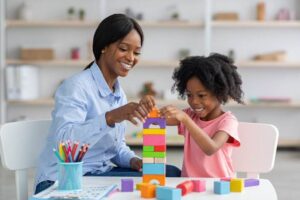
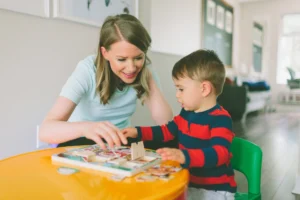
If your toddler tends to play alongside you rather than with you, or struggles to wait their turn during a game, you’re watching two of the earliest and most important communication skills still developing: joint attention and turn-taking. These skills form the foundation for conversation, social play, and connection — and they’re skills you can build through simple, intentional play at home. Below, a pediatric speech-language pathologist (SLP) shares three practical strategies to strengthen joint attention and turn-taking at home, plus a toy built around back-and-forth play.
This post contains affiliate links. If you purchase through them, SoCal Speech may earn a small commission at no extra cost to you.
Why Joint Attention and Turn-Taking Matter for Development
Joint attention is the shared focus between a child and another person on the same object or activity — it’s the foundation for learning language from others, since a child has to be tuned in to what you’re looking at or talking about in order to learn the word for it. Turn-taking builds on this by teaching children the back-and-forth rhythm that underlies every conversation. Children who struggle with these skills often have difficulty engaging in shared play, following conversations, and picking up new language from the people around them.
3 Actionable Strategies to Build Joint Attention and Turn-Taking at Home
1. Get Face-to-Face and Follow Your Child’s Lead
Joint attention starts with getting physically at your child’s level and tuning in to what they’re already interested in, rather than redirecting them to what you want to focus on. If your child is fascinated by rolling a ball, join them there instead of introducing a new toy.
Try this: During play, get down at your child’s eye level, comment on what they’re doing, and wait for them to check in with you (a glance, a smile, a sound) before responding. This exchange is joint attention in action.
2. Use Toys That Require Back-and-Forth Turns
Toys that only work when two people take turns are one of the most natural ways to build this skill, because the structure of the toy itself creates the back-and-forth.
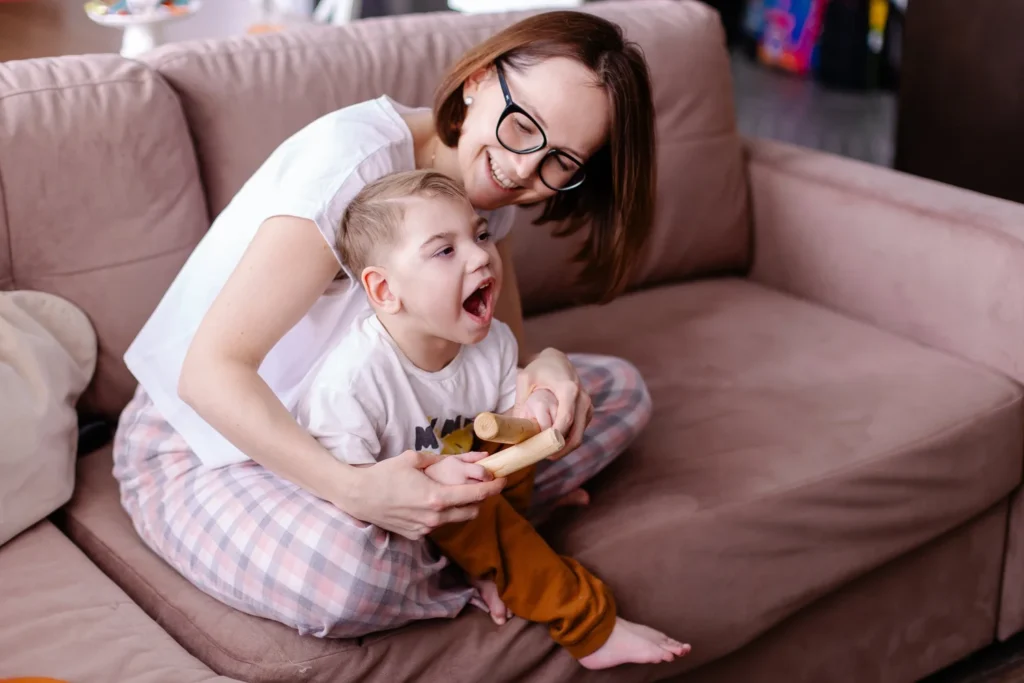
The Wooden Car Ramp Race Track Set is a great example — you and your child can take turns sending cars down the ramp, watching together to see whose car goes farthest or fastest. The shared focus on the ramp naturally builds joint attention, and the structure of “my turn, your turn” builds the pattern of turn-taking your child will later use in conversation.
Try this: Narrate the turns out loud as you play — “My turn… now your turn!” — and pause to make eye contact and share excitement together each time a car reaches the bottom.
3. Pause and Wait to Create Space for Your Child to Initiate
It’s tempting to keep play moving quickly, but pausing is one of the most powerful tools for building joint attention and turn-taking. When you pause mid-activity — holding the car at the top of the ramp, for example — you create a natural opportunity for your child to look at you, reach, vocalize, or otherwise signal that they want their turn.
Try this: Build brief, expectant pauses into play and wait a few extra seconds before continuing. Resist filling every silence — that pause is often where your child’s communication attempt happens.
Common Questions Parents Ask About Joint Attention and Turn-Taking
At what age should joint attention and turn-taking develop?
Joint attention typically begins developing between 9 and 18 months, starting with following another person’s gaze or point and progressing to actively initiating shared attention (like showing you a toy). Turn-taking in play generally begins to emerge around 18-24 months and continues developing through the toddler and preschool years.
What if my child doesn’t seem interested in playing with me?
Start by joining your child’s own activity rather than introducing something new. Following their lead, narrating what they’re doing, and gradually inserting yourself into the play (like adding a second car to the ramp) can build engagement gradually and naturally.
Can toys really help build joint attention and turn-taking?
Yes. Toys that require back-and-forth participation, like the Wooden Car Ramp Race Track Set, give children a built-in structure for sharing focus and alternating turns. Because the toy only works with both people participating, it creates natural, repeated opportunities to practice these skills without formal instruction.
When should I be concerned about my child’s joint attention or social communication skills?
If your child rarely makes eye contact, doesn’t point to show you things, seems uninterested in shared play, or struggles significantly with turn-taking by age 2 to 3, it’s worth having a licensed speech-language pathologist evaluate them. Early support leads to stronger long-term social communication outcomes.
See These Strategies in Action
Reading about these strategies is a great starting point, but watching them modeled during real play can make them much easier to bring into your daily routine. Our team has put together video demonstrations showing exactly how these techniques look in action.
Watch the video demonstrations on our Video Resources page →
The Takeaway
Joint attention and turn-taking are the earliest building blocks of communication and connection — and they grow through simple, intentional play at home. Get face-to-face and follow your child’s lead, use toys built around back-and-forth turns, and pause to give your child space to initiate. Small, consistent moments of shared play add up to meaningful growth in your child’s social communication.
Reach Out to Our Team
If you have questions about your child’s communication development or want personalized home practice strategies, reach out to our team — we’re here to help.
Contact UsAbout the Author
Dr. Carla Kekejian, PhD, CCC-SLP, is the founder of SoCal Speech-Language Therapy and a professor of communication disorders and sciences at California State University, Northridge (CSUN). With over a decade of clinical experience, she specializes in bilingual speech therapy and strengths-based communication support for children in La Cañada Flintridge and across the Greater Los Angeles area, with a focus on evidence-based, culturally responsive care. Read Dr. Kekejian’s full bio, or learn more about her research and teaching.
Medical Disclaimer
The information here is for education and doesn’t replace professional medical advice or a diagnosis. Always talk to your doctor or a qualified health provider with questions about a medical condition.