
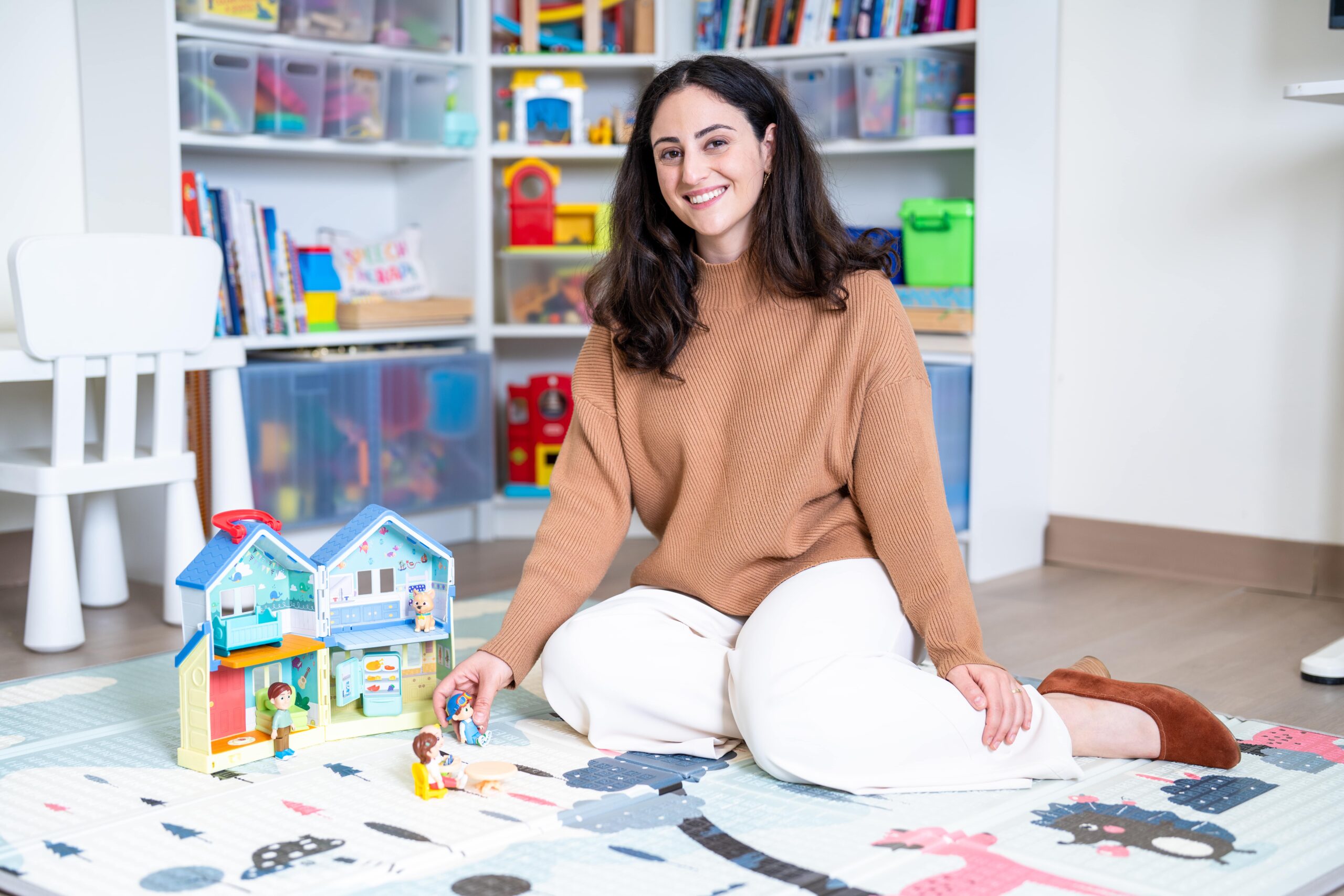
Dr. Kekejian’s Top 10 Toys for Children 3 and Under
From Dr. Carla Kekejian — Pediatric Speech-Language Pathologist · September 24, 2026
Not all toys are created equal when it comes to supporting speech and language development. As a pediatric speech-language pathologist, I look for toys that do more than entertain — I look for toys that naturally invite back-and-forth play, new vocabulary, turn-taking, and fine motor skills that support speech production. Below are my top 10 picks for children 3 and under, along with what makes each one worth adding to your toy shelf.
This post contains affiliate links. If you purchase through them, SoCal Speech may earn a small commission at no extra cost to you.
Balloon Launcher & Powered Car Set
Toddler Toys Balloon Launcher & Powered Car Set turns cause-and-effect into a game: your child pumps up a balloon, attaches it to the car, and releases it to launch the car forward. Because the steps have to happen in the right order, this toy is a fantastic, low-pressure way to build sequencing skills while working on fine motor control.
LeapFrog 4-in-1 Discovery House
LeapFrog 4-in-1 Discovery House packs shape sorting, a spinning gear, a xylophone, and a pretend knock-and-greet door into one toy. The variety gives parents dozens of natural opportunities to model words, encourage imitation, and introduce new vocabulary throughout a single play session.
Wooden Car Ramp Race Track Set
Wooden Car Ramp Race Track Set is one of my favorite tools for building joint attention and turn-taking. Sending cars down the ramp together creates a natural “my turn, your turn” rhythm, and the shared focus on watching the cars race is a simple, powerful way to build connection through play.
Mr. Potato Head Sets
The classic Potato Head Express Yourspud Playset and Mr. Potato Head Set are still speech therapy staples for a reason. Naming and placing body parts builds vocabulary and body awareness, while deciding where each piece goes encourages descriptive language (“big nose,” “silly hat”) and requesting skills (“I want the ears”).
Cutting Play Food Kitchen Set
Cutting Play Food Kitchen Toy brings pretend play and vocabulary together in one set. “Cutting” fruits and vegetables gives you a built-in reason to model food vocabulary, action words (“cut,” “slice,” “cook”), and early sequencing (“first we chop, then we serve”) during imaginative play.
Xylo-Pound Whale Pounding Bench
Xylo-Pound Whale Pounding Bench with Xylophone combines a pounding bench with a built-in xylophone, giving your child a satisfying cause-and-effect response to hammering. This kind of toy supports fine motor development and hand strength, which are closely linked to the oral motor control needed for clear speech.
Fat Brain Toys SpinAgain
Fat Brain Toys SpinAgain is a simple stacking and spinning toy that’s great for modeling early concept words like “up,” “down,” “spin,” and “again.” Its repeatable design makes it easy to build in requesting practice — encouraging your child to ask for “more” each time they want another turn.
Spike the Original Fine Motor Hedgehog
Spike The Original Fine Motor Hedgehog is a favorite for building the pincer grasp and fine motor coordination that support both self-help skills and speech development. Adding and removing the quills is also a great context for modeling concept words like “in,” “out,” “color names,” and counting.
Montessori Sorting & Stacking Blocks
Montessori Sorting & Stacking Blocks with Nesting Garages Cars combines sorting, stacking, and pretend car play into one open-ended toy. Sorting by color and size supports early concept vocabulary, while the nesting garages naturally invite descriptive and spatial language like “in,” “under,” and “big garage.”
Learning Resources Hide-N-Go Moo
Learning Resources Hide-N-Go Moo is a search-and-find game built around hiding and finding a cow among a set of barns. It’s an excellent tool for practicing “where” questions and building anticipation and joint attention, since the payoff of finding the cow keeps children motivated to play again and again.
Frequently Asked Questions About Toys for Speech Development
What makes a toy good for speech and language development?
The best toys for speech and language development are open-ended, encourage back-and-forth interaction, and give parents natural opportunities to model new words. Toys with a single button or sound offer fewer language opportunities than toys involving multiple pieces, actions, or pretend play.
Do I need special or expensive toys to work on speech at home?
No. While certain toys make it easier to create natural language opportunities, the most important factor is how you play — narrating, modeling, pausing, and taking turns can turn almost any toy into a speech and language learning opportunity.
How many toys should be in a toddler’s rotation?
Fewer toys, rotated regularly, are generally more effective than a large volume of toys available all at once. A smaller rotation helps children engage more deeply with each toy, which creates more repeated opportunities to practice the same target words and skills.
The Takeaway
The toys on this list were chosen because they do more than keep little hands busy — each one creates natural opportunities to build vocabulary, turn-taking, sequencing, and fine motor skills that support speech. Rotate a few of these into playtime, narrate and model along the way, and you’ll be giving your child valuable language practice without it ever feeling like a lesson.
Reach Out to Our Team
If you have questions about your child’s speech and language development or want personalized toy recommendations, reach out to our team — we’re here to help.
Contact UsAbout the Author
Dr. Carla Kekejian, PhD, CCC-SLP, is the founder of SoCal Speech-Language Therapy and a professor of communication disorders and sciences at California State University, Northridge (CSUN). With over a decade of clinical experience, she specializes in bilingual speech therapy and strengths-based communication support for children in La Cañada Flintridge and across the Greater Los Angeles area, with a focus on evidence-based, culturally responsive care. Read Dr. Kekejian’s full bio, or learn more about her research and teaching.
Medical Disclaimer
The information here is for education and doesn’t replace professional medical advice or a diagnosis. Always talk to your doctor or a qualified health provider with questions about a medical condition.